![]()
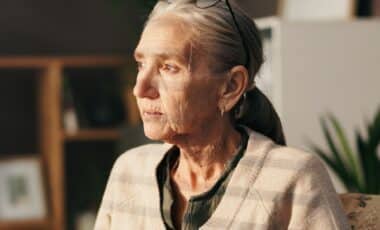
When Tivaporn Sriwavakul’s father bought a mine, it propelled her towards an unlikely second career as an environmental champion, as she explains to Natnalin Thananan
Tivaporn Sriwavakul didn’t start out trying to save the environment. She has a diploma in accounting and hotel management and was raising a young family with her husband, until two different incidents changed her life. Back in the 1970s, a relative of hers invited her to visit the Sai Yok National Park and Tivaporn fell in love with nature. Then when a family friend approached her father to buy land that had a mine on it in Kanchanaburi’s Tao Dum forest (which has been a part of the extended Sai Yok National Park since 1980), she encouraged her father to buy the 440-rai plot.
“I felt at peace being close to nature. It’s very serene and quiet,” Tivaporn says. As she learned the ropes of how to run a mine, she became aware of the plight of her workers and their unsanitary and unsafe working conditions. She made it her goal to improve their standard of living, and eventually other mines in the area adopted her methods and improved their standards. Some of the health issues she dealt with included malaria, lice and standard health protocols, about which the workers had not been educated. It may appear incongruous that a woman known for the preservation of the environment would own a mine, but Tivaporn actually has a very good reason. “We don’t mine the resources to the point of depletion,” she explains. “Minerals are necessary in many industries, therefore in a controlled setting, it is all right to mine the resources, as long as we allow them time to recover.”
Because she focused most of her time and resources on improving the health and lives of her workers, as well as preserving the natural resources in the land, Tivaporn found herself in a financial predicament. When a potential buyer offered to pay her a substantial amount of money for the land, Tivaporn was tempted to sell. However, she turned down the offer because she knew the buyer was only going to exploit the forest and cut down the trees for timber. “I knew that all my problems would have been solved if I took their offer, but I couldn’t do it,” she recalls. “For the longest time I felt guilty for not taking it and giving my children a better life. It was only recently that my children, now grown, told me that they were happy I didn’t sell the land and kept the forest protected. It was as if a weight had been lifted off my shoulders.”
Because she laid down rules forbidding the hunting of animals and felling of trees in the forest area, this brave woman faced a lot of criticism from locals. “It was during the 1997 crisis and a lot of people didn’t understand the concept of sustainable living and didn’t agree with what I was trying to do,” she says. She was later invited by the Social Investment Forum to become part of the committee to help allocate funds to the causes in Kanchanaburi province and to underprivileged groups.
Tivaporn also advocates the farming of plant species that are close to extinction. She tells us that there are numerous plants that are unique to the forest and can have dietary and medicinal qualities. She is currently trying to bring back original Thai herbs that have not been available in the market in recent years. “Thailand now
imports these plants, but they grow here,” she says. “We should try to bring back what is our heritage.”
AT A GLANCE
AGE 63
EDUCATION Diploma in accounting and hotel management
FAMILY STATUS Widowed with two grown children
MOST PROUD OF Overcoming greed to preserve Tao Dum forest for future generations
MOTTO Never give up, whatever the obstacles
ROLE MODELS Her parents


Leave a Comment